
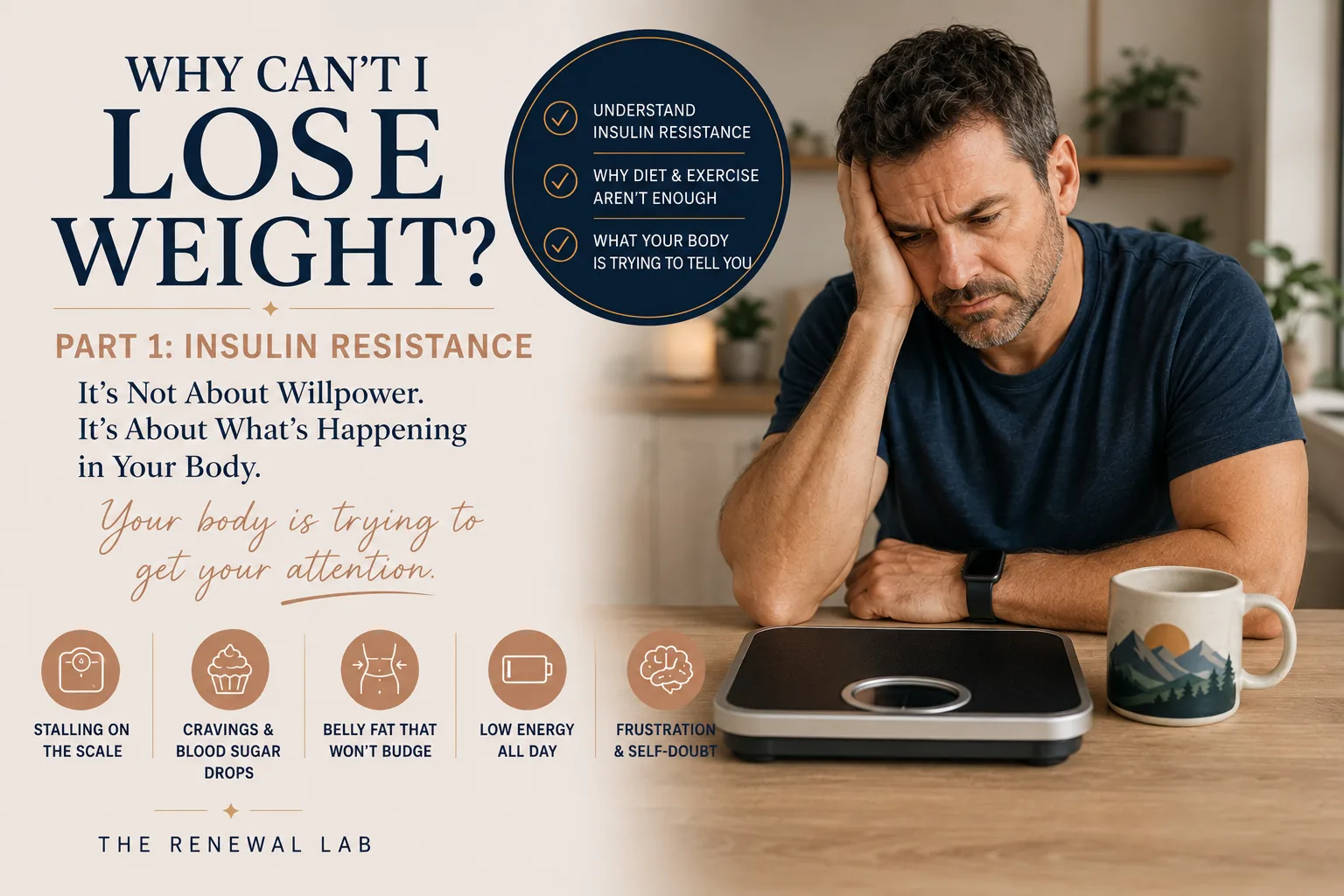
“If I’m eating fewer calories than I’m burning, why can’t I lose weight?” It is one of the most common and frustrating questions patients ask. Many people are tracking food, prioritizing protein, exercising consistently, and trying harder than ever — yet the scale barely moves.
This article is for the person who has already made meaningful changes and is still struggling. When that happens, it is time to stop asking whether you are trying hard enough and start asking whether your body is sending you a message.
Calories Matter, But They Are Not the Whole Story
Weight change cannot be explained without energy balance, and hormones do not change the laws of physics. What hormones can influence is hunger, fullness, muscle maintenance, energy expenditure, access to stored body fat, and how strongly the body defends its current weight.
Two people can follow the same plan and respond differently because their physiology is different. Insulin resistance is one of the most common reasons that weight loss can feel more difficult than it should.
What Is Insulin Resistance?
Insulin is a hormone released after you eat to move nutrients out of the bloodstream and into cells for energy, storage, or repair. Over time, cells can become less responsive to insulin. The pancreas then produces more insulin in an effort to keep blood sugar controlled.
Insulin resistance can develop years before a person is diagnosed with prediabetes or type 2 diabetes. During that period, fasting glucose can remain normal while insulin levels rise behind the scenes.
Why Insulin Resistance Can Make Weight Loss Harder
When insulin remains elevated for long periods, the body receives signals that favor storing energy rather than releasing it. Many people also experience increased hunger, stronger cravings, difficulty feeling satisfied after meals, and lower energy that makes regular movement harder.
Insulin resistance often travels alongside chronic inflammation, increasing visceral fat, fatty liver disease, abnormal cholesterol, elevated blood pressure, PCOS, and eventually type 2 diabetes. These conditions can reinforce one another over time.
Signs You May Be Insulin Resistant
- Difficulty losing weight despite consistent effort
- Weight gain around the abdomen
- Strong carbohydrate or sweet cravings
- Feeling hungry shortly after eating or fatigued after meals
- Brain fog, skin tags, or darkened skin in the neck, armpits, or groin
- Elevated triglycerides, PCOS, or a family history of type 2 diabetes
No single symptom confirms insulin resistance, and not everyone experiences all of these signs. But when several clues appear together, it is worth considering whether metabolic dysfunction is contributing to the bigger picture.
Why Weight Loss Is Not Just About Willpower
Nutrition and movement matter. That does not mean the person struggling is unmotivated. Often, they are fighting physiology. Understanding why the body is resisting weight loss is every bit as important as creating a calorie deficit.
Where Do GLP-1 Medications Fit?
When used appropriately, GLP-1 medications can reduce appetite, improve insulin sensitivity, promote meaningful weight loss, and lower risk for several obesity-related conditions. They are powerful tools, not magic, and are not appropriate for everyone.
Even when medication is appropriate, nutrition, sleep, muscle health, physical activity, and the drivers of metabolic dysfunction still matter for long-term success.
The Bottom Line
If you have been eating well, prioritizing protein, exercising consistently, and still struggling to lose weight, do not automatically assume you are doing something wrong. Insulin resistance is one of the most common barriers — and it is something that can be identified and addressed.
Next in the Series
Part 2 will explore another often-overlooked contributor to weight-loss resistance: thyroid dysfunction and thyroid hormone resistance.